
What Is the Best Facial for Acne-Prone Skin?
Acne-prone skin does not always need harsher products or more aggressive exfoliation. The right professional facial should address congestion, excess buildup, inflammation, hydration, and sensitivity while being customized to what your skin can comfortably tolerate.
Book a Personalized FacialWhich Facial Is Best for Acne-Prone Skin?
The best facial for acne-prone skin is usually a customized treatment focused on cleansing, appropriate exfoliation, congestion management, extractions when suitable, hydration, and calming the skin. The exact treatment depends on whether you are experiencing blackheads, clogged pores, active breakouts, excess oil, dehydration, sensitivity, or post-breakout marks.
A professional skin analysis helps determine which techniques and enhancements are appropriate rather than treating every breakout with the same aggressive approach.
What Does Acne-Prone Skin Actually Need?
Acne-prone skin can be complicated because breakouts are only one part of the picture. The same complexion may also experience excess oil, blackheads, dehydration, sensitivity, redness, rough texture, or post-breakout discoloration.
That means the strongest treatment is not automatically the best treatment.
Professional skincare should consider what is happening across the entire complexion rather than focusing only on visible blemishes.
An esthetician may evaluate:
- Active breakouts
- Blackheads and whiteheads
- Clogged pores
- Oil production
- Dehydration
- Redness and sensitivity
- Skin texture
- Post-breakout marks
- Current skincare products
This broader evaluation helps determine how a facial should be customized.
What Causes Acne and Breakouts?
Breakouts can develop for different reasons, and more than one factor may be involved at the same time.
Factors associated with acne-prone or congested skin can include:
- Excess oil production
- Dead skin buildup
- Clogged follicles
- Hormonal changes
- Skin irritation
- Stress and lifestyle factors
- Makeup or skincare products
- Sweat and environmental buildup
- Over-exfoliating
- Using overly drying products
Because the causes and severity of acne vary, a professional facial should be considered one part of an individualized skincare approach rather than a universal cure for every type of acne.

What Should an Acne Facial Include?
An acne-focused facial should be customized according to the type of congestion and breakouts present, the condition of the skin barrier, and how sensitive the skin is at the time of treatment.
Depending on your skin, treatment may include:
- Professional cleansing
- Detailed skin analysis
- Enzyme or other appropriate exfoliation
- Steam when suitable
- Professional extractions when appropriate
- High-frequency treatment
- Oxygen or LED enhancements when appropriate
- Calming products
- Hydration and barrier support
- Sun protection
Citrine offers customized facial treatments in Raleigh that can be tailored around the client's current skin concerns.
How Does a Professional Acne Facial Work?
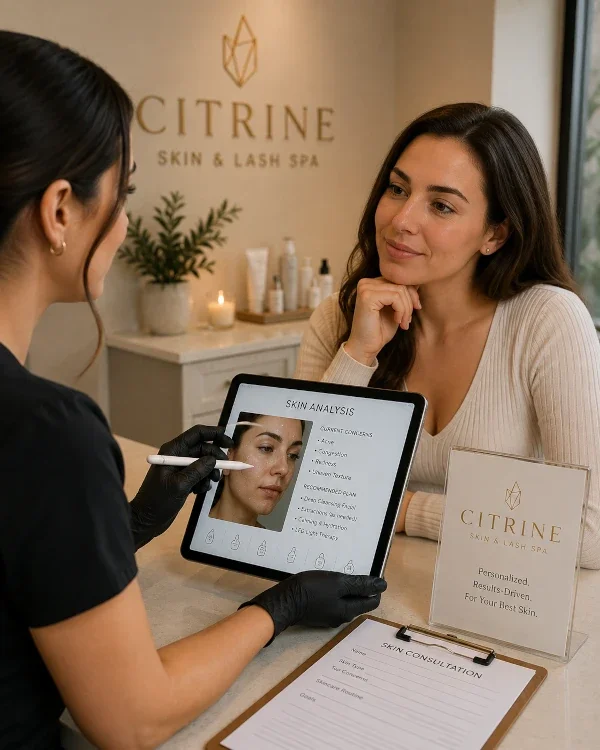
Skin Analysis
Your esthetician looks at breakouts, congestion, oil production, sensitivity, hydration, texture, and your current skincare routine.
Deep Cleansing
Makeup, sunscreen, oil, and surface buildup are removed without unnecessarily stripping the skin.
Customized Exfoliation
Appropriate exfoliation may help loosen dead skin and buildup that contribute to congestion.
Extractions When Appropriate
Accessible blackheads and congestion may be professionally extracted when the skin can tolerate it.
Targeted Treatment
High frequency, oxygen, LED, calming products, or other enhancements may be selected according to your skin.
Hydration & Protection
Appropriate hydration, barrier-supporting products, and sun protection help finish the treatment.
Are Extractions Good for Acne-Prone Skin?
Extractions can be helpful for certain types of congestion, especially accessible blackheads and clogged pores. However, not every blemish should be squeezed or extracted.
Inflamed or deeper breakouts may require a different approach, and aggressive manipulation can unnecessarily irritate the skin.
For a deeper explanation of congestion and blackheads, read: What Is the Best Facial for Clogged Pores and Blackheads?
Can Acne-Prone Skin Also Be Dehydrated?
Yes. Acne-prone skin is not automatically well hydrated simply because it produces oil.
A complexion can experience excess oil and still lack water. Over-cleansing, harsh acne products, aggressive exfoliation, and other factors can also leave skin feeling tight, uncomfortable, or sensitized.
This matters because continually trying to "dry out" acne-prone skin may not address the skin's full needs.
Citrine's What Facial Is Best for My Skin Type? guide explains why skin condition matters just as much as a traditional skin-type label.
Which Facial Treatments May Help Acne-Prone Skin?
The most appropriate treatment depends on whether your main concern is congestion, blackheads, active breakouts, sensitivity, oiliness, dehydration, texture, or post-breakout discoloration.
Deep Cleansing Facial
May help remove surface buildup, address congestion, and prepare the skin for appropriate exfoliation and extractions.
Professional Exfoliation
Enzymes, acids, or other professional exfoliation techniques may help loosen dead skin buildup that contributes to clogged pores.
High-Frequency Treatment
High frequency may be incorporated into some acne-focused facial treatments depending on the client's skin and treatment plan.
LED Light Therapy
LED may be used as a facial enhancement when appropriate to support a customized skincare treatment.
Oxygen Treatment
Oxygen-based treatments may be considered when the skin also needs hydration, calming support, or a refreshed appearance.
Chemical Exfoliation
Professional peels may help some clients with congestion, uneven texture, and post-breakout discoloration when selected appropriately.
Explore Citrine's facial enhancements to learn more about available treatment options.
How Often Should You Get a Facial for Acne-Prone Skin?
There is no single schedule that works for every acne-prone complexion. Facial frequency depends on your skin's current condition, level of congestion, sensitivity, treatment type, home skincare routine, and long-term goals.
Some clients benefit from consistent maintenance, while others may follow a more targeted treatment schedule recommended by their esthetician.
Regular professional care can also make it easier to adjust treatments as your skin changes over time.
Visit the Citrine skincare blog for more education about facial frequency and treatment planning.
What Should You Do After an Acne Facial?
After professional exfoliation, extractions, or other targeted treatment, your skin may temporarily be more sensitive than usual.
General aftercare may include:
- Use gentle skincare products
- Avoid picking or squeezing blemishes
- Wear broad-spectrum sunscreen daily
- Keep the skin properly hydrated
- Avoid aggressive exfoliation immediately afterward
- Follow your esthetician's specific recommendations
Your aftercare may vary depending on the treatment performed, so professional guidance should always take priority over generic advice.
What Should Acne-Prone Skin Avoid?
When breakouts appear, it can be tempting to attack the skin with stronger products and more frequent exfoliation. In some cases, that can make irritation and sensitivity worse.
Habits worth discussing with your esthetician include:
- Over-cleansing
- Using multiple harsh acne products at once
- Frequent scrubbing
- Picking or squeezing blemishes
- Skipping moisturizer because the skin feels oily
- Using products that repeatedly irritate the skin
- Changing your entire skincare routine too frequently
How Can You Support Acne-Prone Skin Between Facials?
Professional facials can help address congestion and support healthier-looking skin, but your home routine also plays an important role.
Helpful habits may include:
- Cleanse consistently without over-stripping the skin
- Remove makeup thoroughly
- Use skincare products suited to your current skin condition
- Keep the skin hydrated
- Wear sunscreen daily
- Avoid squeezing breakouts
- Clean pillowcases, phones, and other items that frequently touch the face
- Follow a consistent routine rather than constantly switching products
When Should You See an Esthetician?
If recurring congestion, blackheads, breakouts, or post-breakout texture are frustrating you, a professional skin consultation can help you better understand what your skin may need.
Citrine Skin & Lash Spa focuses on personalized skincare rather than giving every acne-prone client the same facial.
Schedule Your Facial AppointmentAcne Facials in Raleigh, NC
If breakouts, clogged pores, blackheads, or recurring congestion are affecting how you feel about your skin, professional care can help you better understand the factors contributing to your concerns.
At Citrine Skin & Lash Spa in Raleigh, facial treatments are personalized around your skin's current condition, sensitivity, hydration level, concerns, and goals.
Rather than automatically reaching for the harshest treatment, Citrine's approach focuses on thoughtful skincare and appropriate treatment selection.
Explore Citrine's facial services in Raleigh or book an appointment online .
Frequently Asked Questions About Facials for Acne-Prone Skin
What facial is best for acne-prone skin?
The best facial depends on the type of breakouts and congestion present, along with sensitivity, hydration, oil production, and current skin condition. A customized treatment may include cleansing, exfoliation, extractions, hydration, and targeted enhancements.
Can facials help acne?
Professional facials can help address concerns associated with acne-prone skin, including congestion, excess buildup, blackheads, oiliness, and texture. Results and appropriate treatment vary by individual.
Are extractions good for acne?
Extractions can be helpful for accessible blackheads and certain clogged pores. Inflamed or deeper blemishes may not be appropriate for extraction.
Can a facial make acne worse?
Acne-prone skin can become irritated when treatments are too aggressive or poorly matched to the skin. This is why customized treatment and professional skin analysis are important.
Can oily acne-prone skin be dehydrated?
Yes. Skin can produce excess oil while still lacking water. Over-cleansing and harsh acne products may also contribute to tightness, sensitivity, and dehydration.
How often should acne-prone skin get a facial?
Facial frequency depends on your current skin condition, treatment type, level of congestion, sensitivity, and home-care routine. Your esthetician can recommend a schedule based on your individual needs.
Should I get a facial during an active breakout?
It depends on the type and severity of the breakout. A professional esthetician can evaluate your skin and determine whether a facial should be modified, postponed, or performed using a gentler approach.
Are chemical peels good for acne-prone skin?
Certain professional chemical peels may be appropriate for congestion, uneven texture, or post-breakout discoloration. The type and strength should be selected according to your skin condition and sensitivity.
Should I moisturize acne-prone skin?
Acne-prone skin can still need hydration. The appropriate moisturizer depends on your skin condition and the products already in your routine.
Ready for a More Personalized Approach to Acne-Prone Skin?
Citrine Skin & Lash Spa offers customized facial treatments in Raleigh based on your current skin condition, congestion, sensitivity, hydration, and skincare goals.
Book Your Appointment Online